Everyone did their job. Dinner still wasn't ready.
A city day built around resources, handoffs, ownership and purpose — for organisations where every department reports progress and the customer still doesn't get what was promised. This one ran in Reno.
One Crazy Day: Ownership · Reno
A destination, a set of checkpoints, and almost none of the information they wanted.
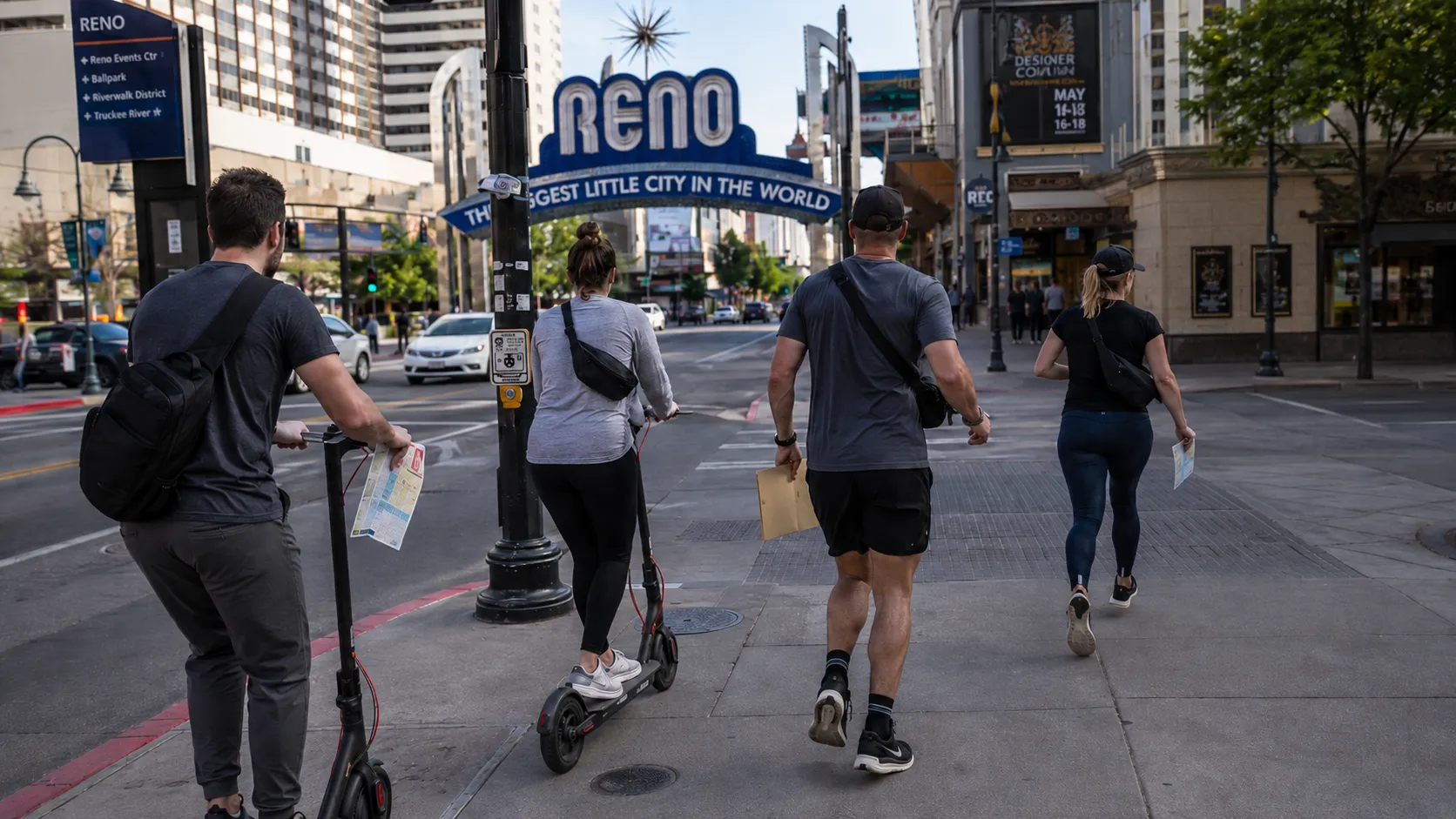
Teams released into Reno in a race across the city. No private vehicles — buses, walking and rentable scooters, with taxis and rideshare available at a real cost against their own budget. Each person carried a preloaded card and was told two things: there is enough on it to complete the day, and whatever is left at the end will matter.
The card
$2,500, and they had no idea
Every card held far more than anyone could spend in a day. They were never told the balance. Not knowing turned every purchase into a judgement call: spend to move faster or conserve and lose time; buy food now or assume another chance to eat appears; take the direct route or chase extra checkpoints that might earn recognition and might drain the transport budget. We were not testing frugality. We wanted to see what they would spend money on, and how they would decide.
Immediately
Four different instincts
Some teams started calculating at once. Some spent freely. Some treated the cards as individual property; others pooled information and ran a shared budget. A few asked what the money was ultimately for. Most simply started moving.
At a checkpoint
A field of loaded mousetraps
Shoes off. One person blindfolded, a partner guiding them through by voice alone. Uncomfortable by design — but the mousetraps were never the challenge. The challenge was trust under consequence. The blindfolded person had to judge whether the instructions were precise enough to act on. The guide had to convert what they could see into something another body could actually use. Some overexplained. Some got louder when clarity failed. Some moved too fast. Others found a calm rhythm, confirmed understanding, and adjusted after every step. The difference between issuing instructions and creating understanding stopped being an abstraction.
11:00 a.m.
Lunch was mandatory. What they did with it was not.
They had to eat — and how they ate came straight off the card. Some went deliberately cheap and banked the difference. Others sat down to an expensive meal. Both were legitimate. Both were data.
Late afternoon
A rented house, and a debrief that was not the end
Tired and increasingly hungry, they were directed to a house where they believed the race was finishing. A short debrief began — the decisions they had made, how they had used their money, what they had noticed in each other. Then the final assignment arrived: you are making dinner, and it must be complete and ready to eat at exactly 7:00 p.m.
The kitchen
Eight stations and a culinary school
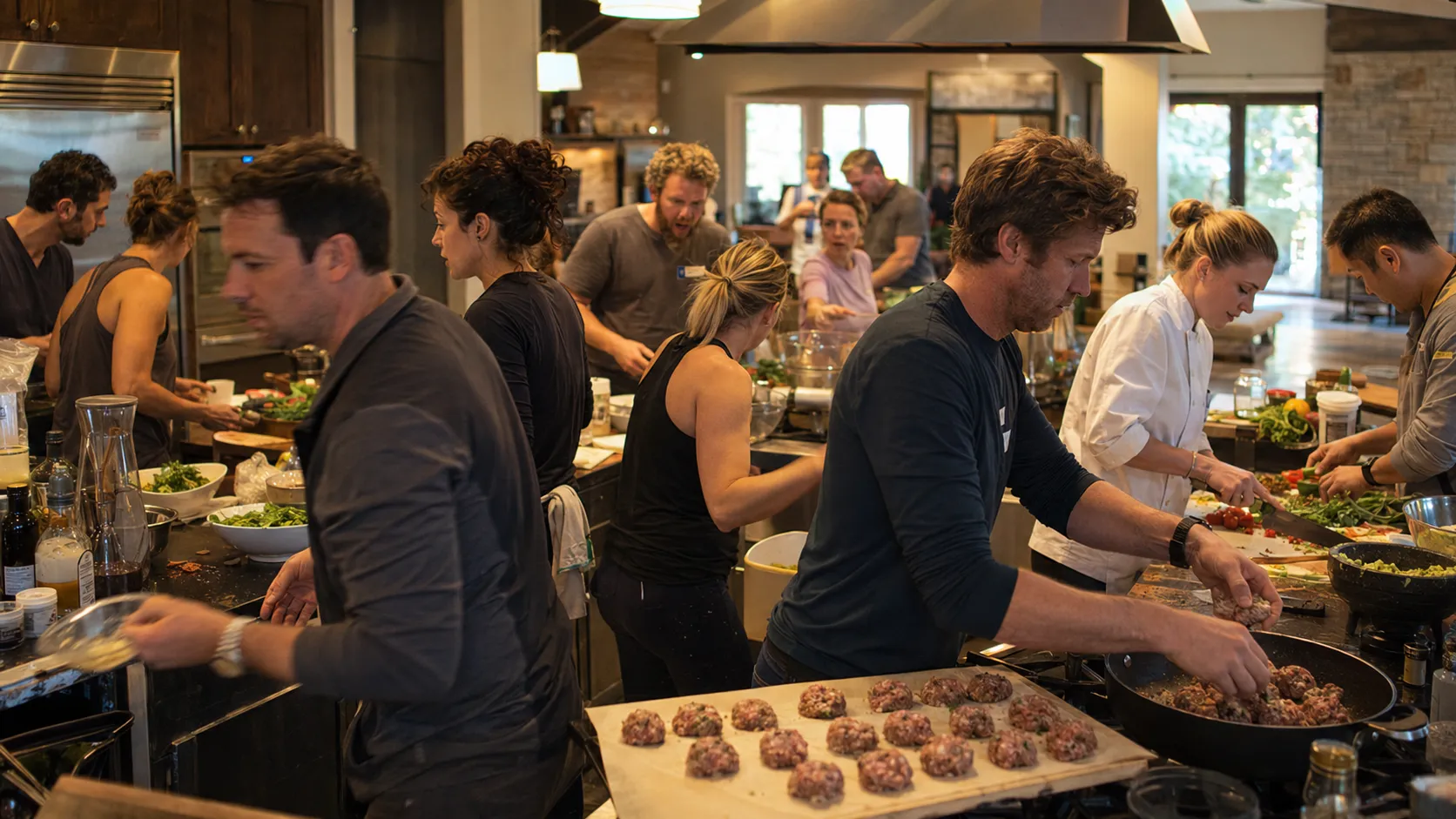
The house had been converted into stations — meat, pasta, vegetables, sauces, guacamole, prep, garnish. Students from a local university culinary programme moved between them teaching technique as the executives worked: which knife, how to cut this, how to season, how to make the dish better.
Sixty seconds in
Switch.
Everyone leaves the work they have started and moves to another station. No staying with the same partner. No time to explain what you did or why. You inherit someone else’s half-finished work, figure out its state, contribute, and leave again. Switch. Switch.
The meatballs
Two people, both right
One executive combined two ground meats, seasoned the mixture carefully, shaped meatballs, and had a clear picture of the finished dish. Several rotations later an executive from northern Italy arrived at that station. In her experience, that was not how this dish is made. She broke the meatballs apart, cooked the meat differently, and turned it into a rich pasta sauce. The result was excellent. When he came back and asked where his meatballs were, he was genuinely angry. He had invested effort and a plan; someone had erased the visible result of his work without asking. She believed she had improved it. Neither position was irrational. Work had moved between people — and ownership, intent, standards and context had not moved with it.
7:00 p.m.
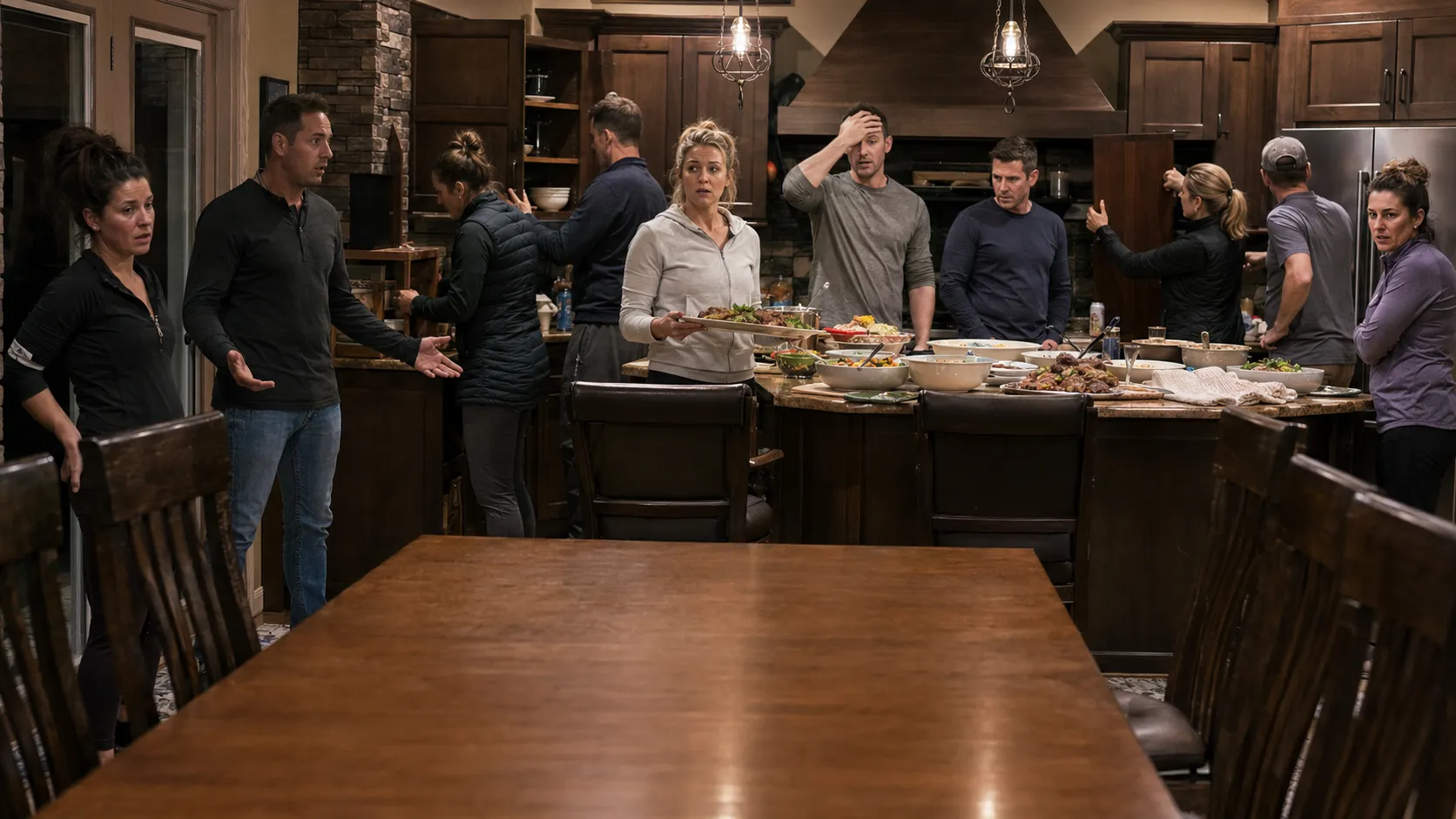
The food was ready. The meal was not.
The facilitators stopped the activity. Every station had delivered. The dishes were finished, garnished, beautiful. And there were no plates on the table, no glasses, no place settings — nowhere for anyone to actually sit down and eat. The goal had never been to cook food. The goal was dinner, ready at 7:00. Setting the table belonged to no one, so no one did it. They fixed it fast: plates found, table set, music on, candles lit, food brought together. The room finally looked ready and they were seconds from eating.
Then
There is another place we could eat this
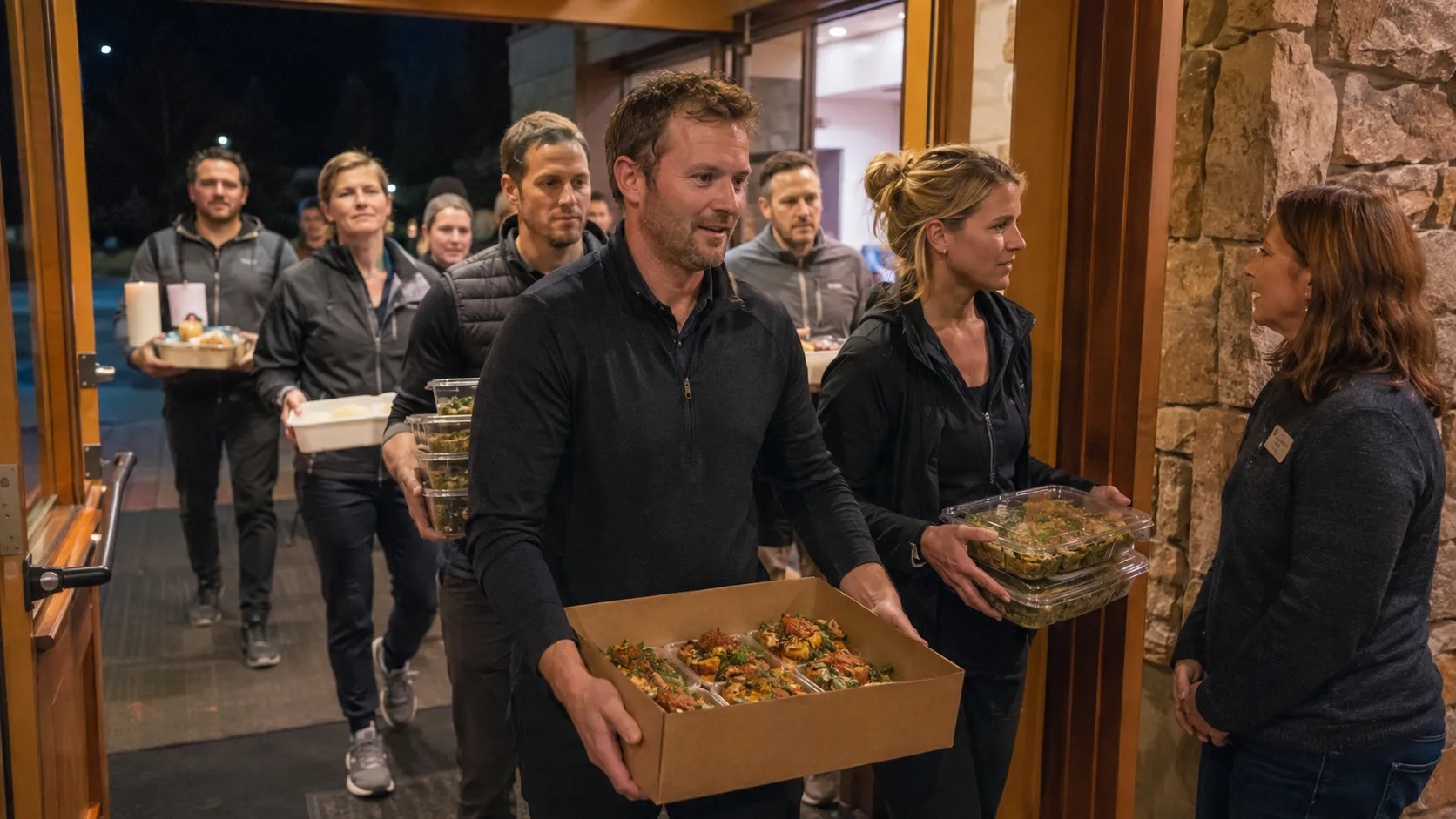
One facilitator suggested it. The other agreed. Containers appeared. At first they assumed it was a picnic. Then the carefully plated dishes started going into plastic. They were furious — hours of work, exhausted, hot, hungry, having watched their own contributions undone, having just fixed the table — and now the meal was being packed away. Every constraint of the day had collected on that dinner.
A few minutes later
The Ronald McDonald House
The vehicles turned into the car park and the group understood before anyone spoke. The dinner had never been for them. It was for parents and families staying near hospitalised children. The anger went. Nobody mentioned being hungry. The same food that had felt like payment for a hard day became something else entirely — relief and hospitality for people carrying far more than the executives had been asked to carry. They carried it in, put the candles they had lit for themselves on somebody else’s table, arranged the dishes, prepared plates, and turned the meal back into what it had been designed to be. They took a short tour, learned about the families, and stayed about twenty minutes. They were not there to be the centre of the moment. They were there to leave something useful behind.
Then pizza
Not elaborate. Unforgettable.
A few minutes away, pizza was waiting. Part of that was hunger. Most of it was meaning. The real debrief happened around that table.
Nobody asked the only question that mattered: what else must be true for us to succeed?
Not whose work should I take over, and not how do I interfere in someone else’s role. Simply: what is left undone because no one owns it?
What the day revealed
Nine patterns, all of them already running inside the business.
Resource behaviour under uncertainty
The unknown balance exposed how people allocate when the budget, the future demands and the scoring logic are all invisible — which is the normal condition of executive work. Some conserved against imagined need, some assumed sufficiency, some coordinated, some went alone.
Local optimisation
Each station behaved like a department: good work produced inside the boundary of the current assignment, with nobody stepping back to ask whether the system was producing the required outcome. The food was finished. Dinner was not ready.
The unowned work
The table was the work that falls between roles. Everyone assumed that if it mattered, someone else must own it. That is not laziness — it is responsibility divided more precisely than the outcome.
Handoffs without context
Rotation meant constant transfer of half-finished work. Each person inherited ingredients and visible output but almost no intent, prior decisions, assumptions or standards. The result was rework and conflicting interpretations — exactly how it fails between functions, sites, shifts and levels.
Attachment to personal work
The meatballs separated contribution from ownership. He saw his creation; she saw an input she was accountable for improving. The question is not whether people should care about their work. They should. It is whether attachment to an individual contribution blocks adaptation and integration.
Initiative beyond the role
No one set the table because no one was told to. The lesson is not that everyone should do everyone else’s job — it is that leaders stay responsible for noticing the distance between assigned work and the required outcome.
Communication under vulnerability
The blindfold tested whether someone can create clarity without control. The guide could see the risk but could not move the other person’s body; the follower had to act with no independent visibility. A working model for delegation and distributed leadership.
Purpose as a regulator of effort
Before the reveal, losing the meal was unfair. After it, the same loss was meaningful. Nothing physical had changed — they were still hungry and tired. Purpose does not remove sacrifice. It changes how the sacrifice is understood.
Emotional reset through contribution
The reveal interrupted a whole day of accumulated frustration and redirected attention outward. They stopped assessing the day by what they were receiving and started assessing it by what they were able to give — which is what made the debrief honest.
Where this format fits
Fifteen conditions this day is built for.
Everyone can be busy. Everyone can be capable. Everyone can do what was assigned. The outcome can still fail.
One Crazy Day makes that failure visible in a way a presentation cannot. It lets leaders feel the cost of fragmented ownership, incomplete handoffs, narrow role definitions and invisible purpose — and then hands them the contrasting experience immediately afterwards.
The same group that could not set its own table built an extraordinary table for people they had never met. The difference was not skill. It was clarity of purpose, shared ownership, and knowing who the work was actually for.
Tell us where they'll be. We'll tell you what's possible there.
Thirty minutes with James. Bring the location and the problem — you'll leave the call knowing whether there's a legendary day in it, and roughly what it costs.
Book a 30-minute design callExecutive Immersion days start at $35,000. See how it fits with the other ways we work →
No pitch deck. No proposal until you've asked for one.