One continuous mission — not a day of activities.
The point of the day is the integration. Any one piece — a citywide race, an immersive-theater production, a community build, a behavioral read on the team — is achievable on its own. The impossibility comes from stitching all of them into one uninterrupted twelve hours, where every decision quietly moves something else. The participants keep asking how it was pulled off. The honest answer is always the same: through preparation, access, partnerships, production, and control — never through deception that creates real danger.
The twelve hours.
The Signal
Every executive wakes in the same hotel. At exactly four, the room television turns itself on: a countdown reading 12:00:00 and a recorded voice — "By sunset, one of the systems this city depends on will fail. You have twelve hours to prevent it." Outside each door: a black case with a city credential, a sealed transit card, a radio earpiece, one unexplained object, and a handwritten location. Each person reports alone, to a different corner of the hotel, and is collected one or two at a time into waiting black vehicles.
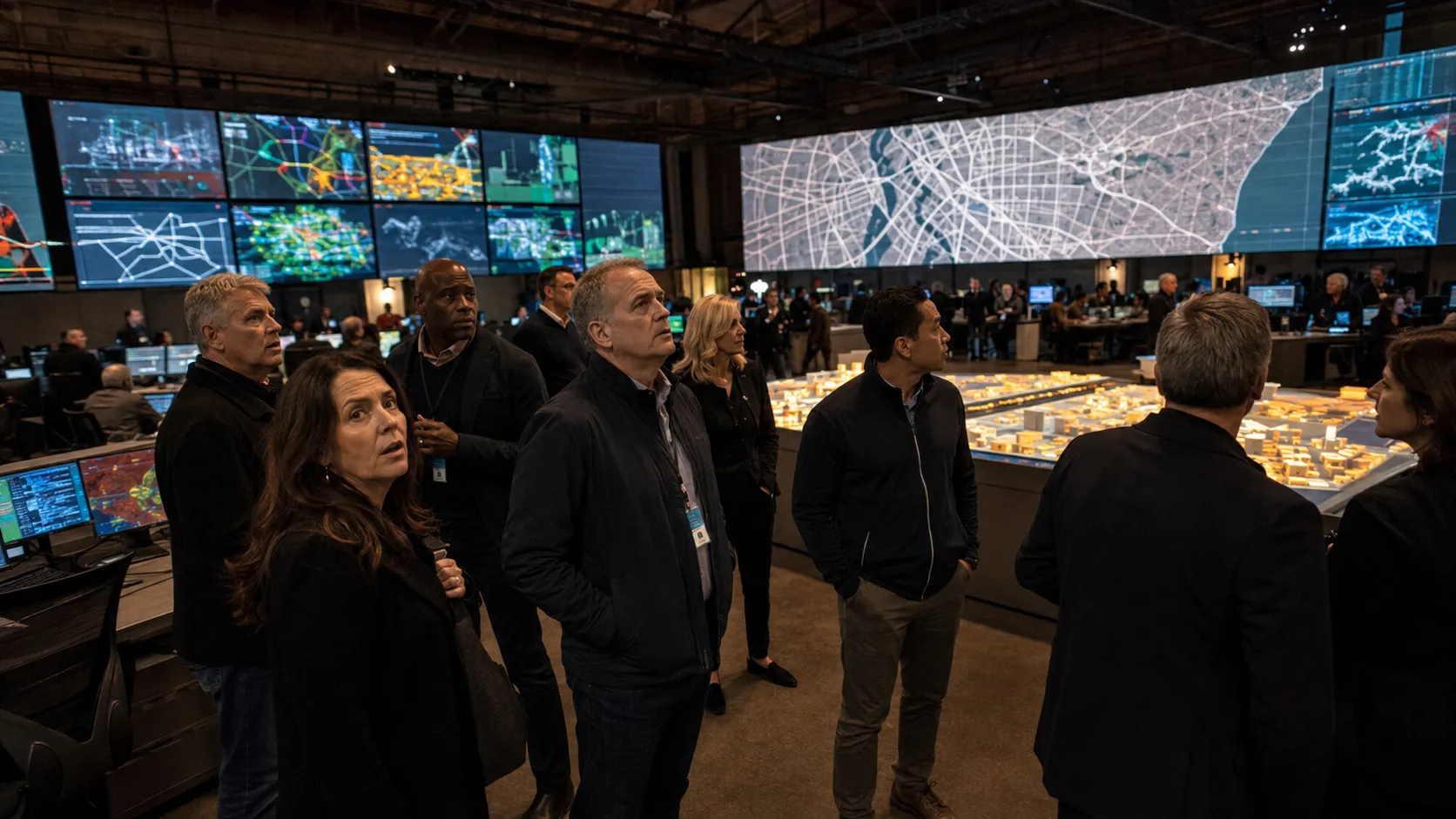
The Command Center
A converted hangar, soundstage, or museum hall — transformed into a credible municipal emergency-operations center. A twenty-foot digital city map, live feeds, status boards for energy, water, transit, food, shelter and medical, and workstations staffed by trained role-players following a script, not improvising chaos. The incident commander delivers the first briefing. A locked case can only be opened with the objects from everyone’s rooms combined. The first lesson lands immediately: no individual holds enough information.
The City Before It Wakes
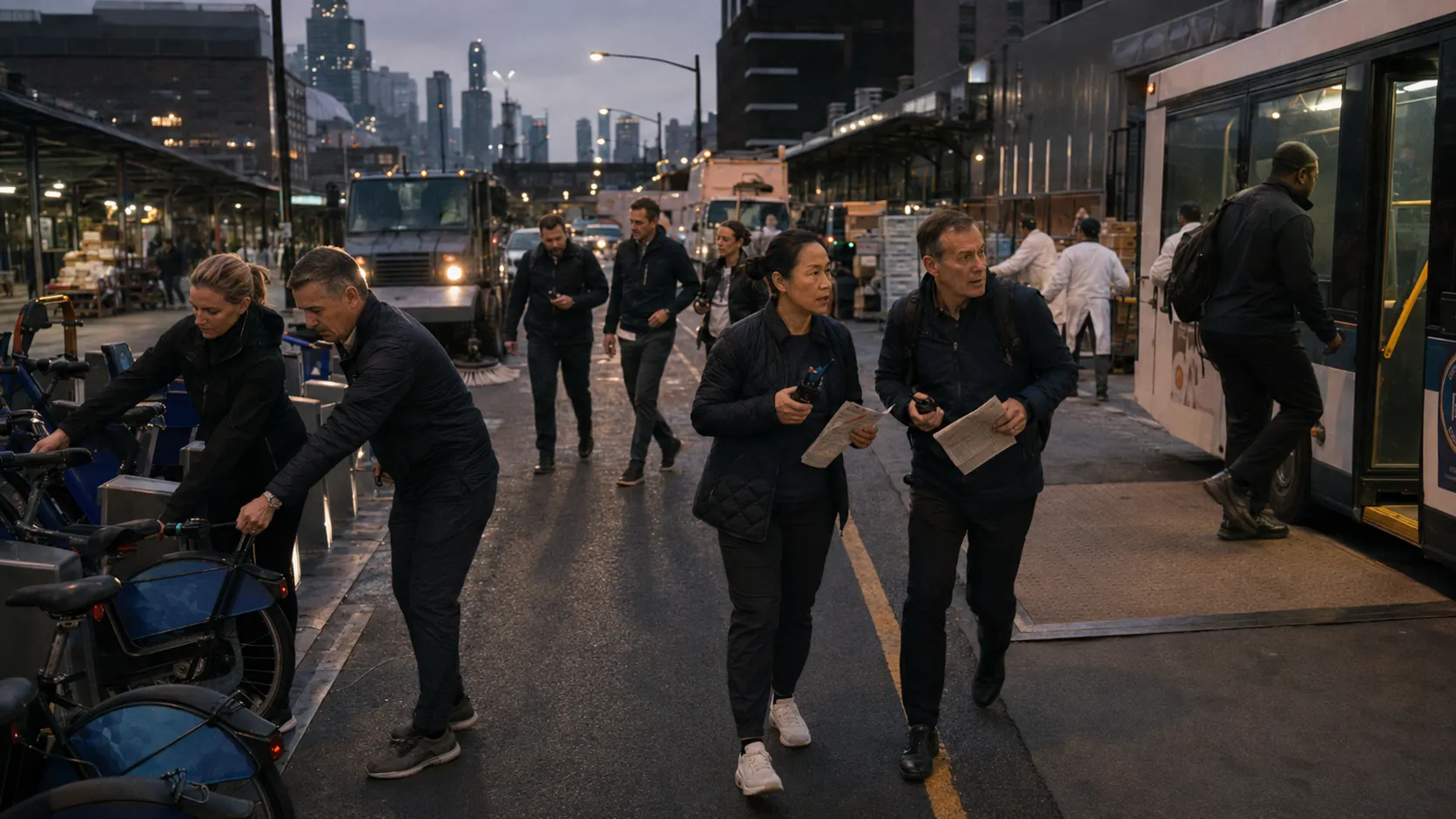
Three teams, three transportation restrictions — public transit only, foot and bicycle, a limited-stop shuttle — dispatched to the hidden parts of a working city: a rail depot, a wholesale food market before opening, an emergency-management site. Each meets real professionals prepared in advance — a transit mechanic, a night-shift nurse, a shelter director. Every task (allocate scarce food, route supplies around a closure, decide which neighborhoods get service first) needs information another team is holding across the city.
The Moving Briefing
The group boards a chartered vintage railcar, ferry, or motor coach converted into a mobile briefing room — maps, screens, breakfast, an operations chief. As the city wakes outside the windows, the first major decision: a simulated power shortage forces them to protect only three of eight districts. The consequences appear live — people affected, financial cost, second-order effects. There is no perfect answer. The value is in how they frame it, who is heard, and which consequences they are willing to externalize.
The Human Network
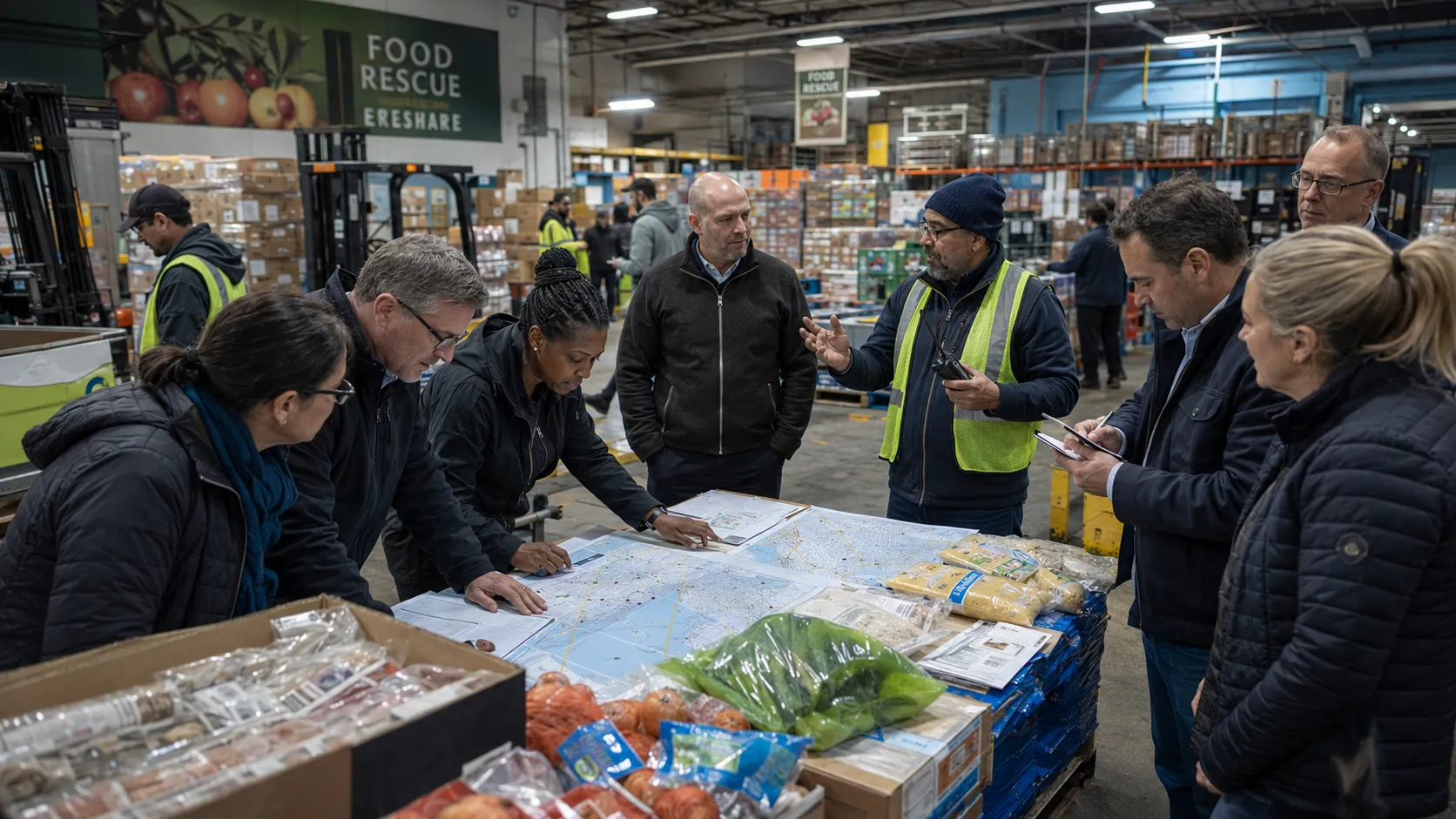
A list of field experts scattered across the city, each holding a piece needed later — a building engineer, a paramedic, a public defender, a food-rescue coordinator, a student who helped build the day’s scoring system. All are participating through formal partnerships. To earn each piece of information, the executives must reach the location and do something genuinely useful: redesign a delivery route, record a ninety-second public message that neither conceals risk nor causes panic, shadow the invisible work that keeps a tower running.
The Exchange
A historic bank hall or trading floor, run live by professional auctioneers. Teams arrive holding different assets — money, information, time, access, decision rights. Up for trade: a helicopter transfer, a full city map, a thirty-minute extension, immunity from one consequence. Each team gets a black card with a known balance and a red card that appears unlimited. The only warning: "Every use of the red card transfers cost somewhere else." They are not told where. Hours later, every charge returns as a consequence.
The Vertical Mile
A tower or stadium under full private access. The apparent challenge is reaching the top by the approved stairs. Halfway up, a fork: one route continues toward the visible finish, the other leads to a community-service operation — assembling emergency kits, preparing meals for hospital families, building housing-transition kits. The scoring rewards climbing. Those who race ahead reach a dramatic rooftop first — and find they cannot leave until the work below is finished. The visible finish depends on the invisible work.
The Impossible Lunch
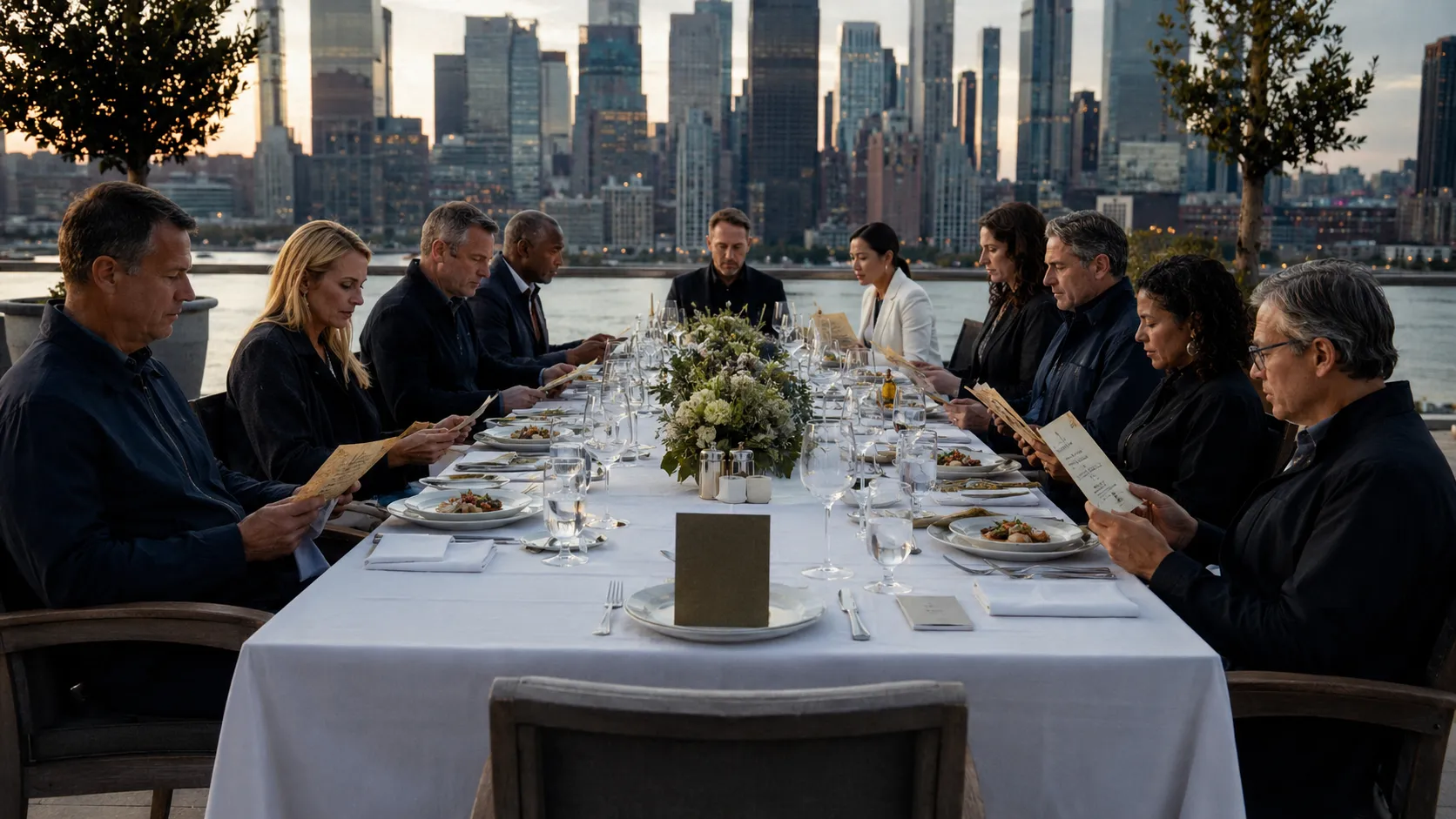
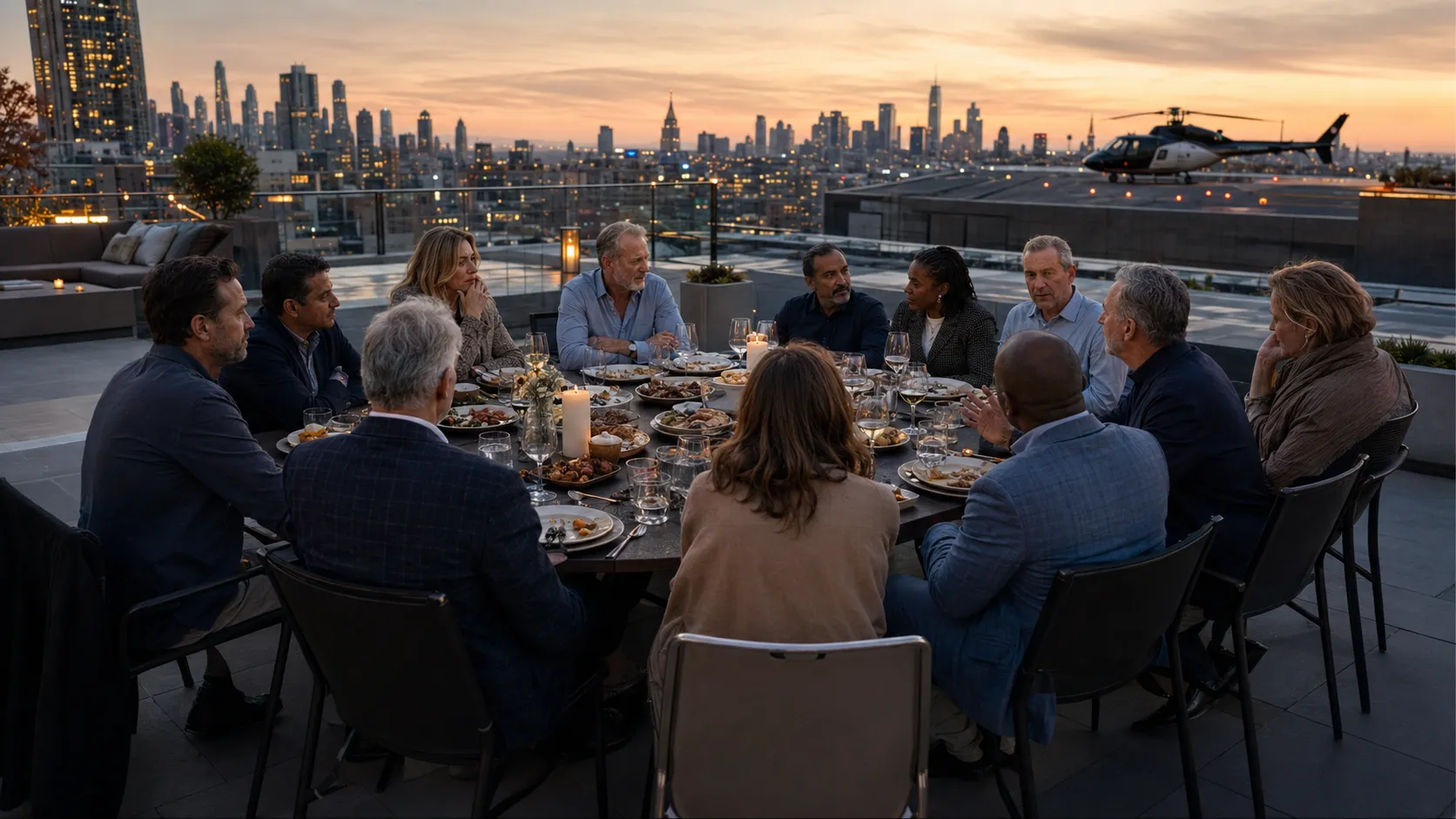
Transferred by helicopter, seaplane, or private railcar to a place that feels severed from the city — a rooftop garden, a decommissioned pier, an airport hangar. A Michelin-level chef has laid a table set for one more person than the number of participants. The empty chair is unexplained. Portions are deliberately scarce, and each seat holds an allocation choice: eat now, pool ingredients, bank for later, or give a share to the unknown guest. Then the guest arrives — a frontline employee, a customer, a stakeholder the leadership routinely affects but rarely includes in the room.
The Cascade
Split again and moved by three different modes, each team is handed authority over exactly one resource — and none has enough to act alone. Then the earlier decisions come back. The district they deprioritized can no longer support the next checkpoint. The time extension they bought delayed someone else. The red-card spending has created a deficit that must be settled. The group that raced ahead has to return and finish what it left. The uncertainty is real for the participants; every branch is controlled by production.
The Public Reckoning
The teams arrive at what they believe is another checkpoint — a theater. The curtain opens on an audience of employees, customers, community partners, family members, board members. The executives have ninety minutes and a full production team to build a live presentation answering four questions: what did we decide, who carried the consequences, what did it reveal about how we lead, and what must change. They cannot fall back on a polished corporate deck — the audience can see the behavioral data. Accountability without humiliation; patterns, not character.
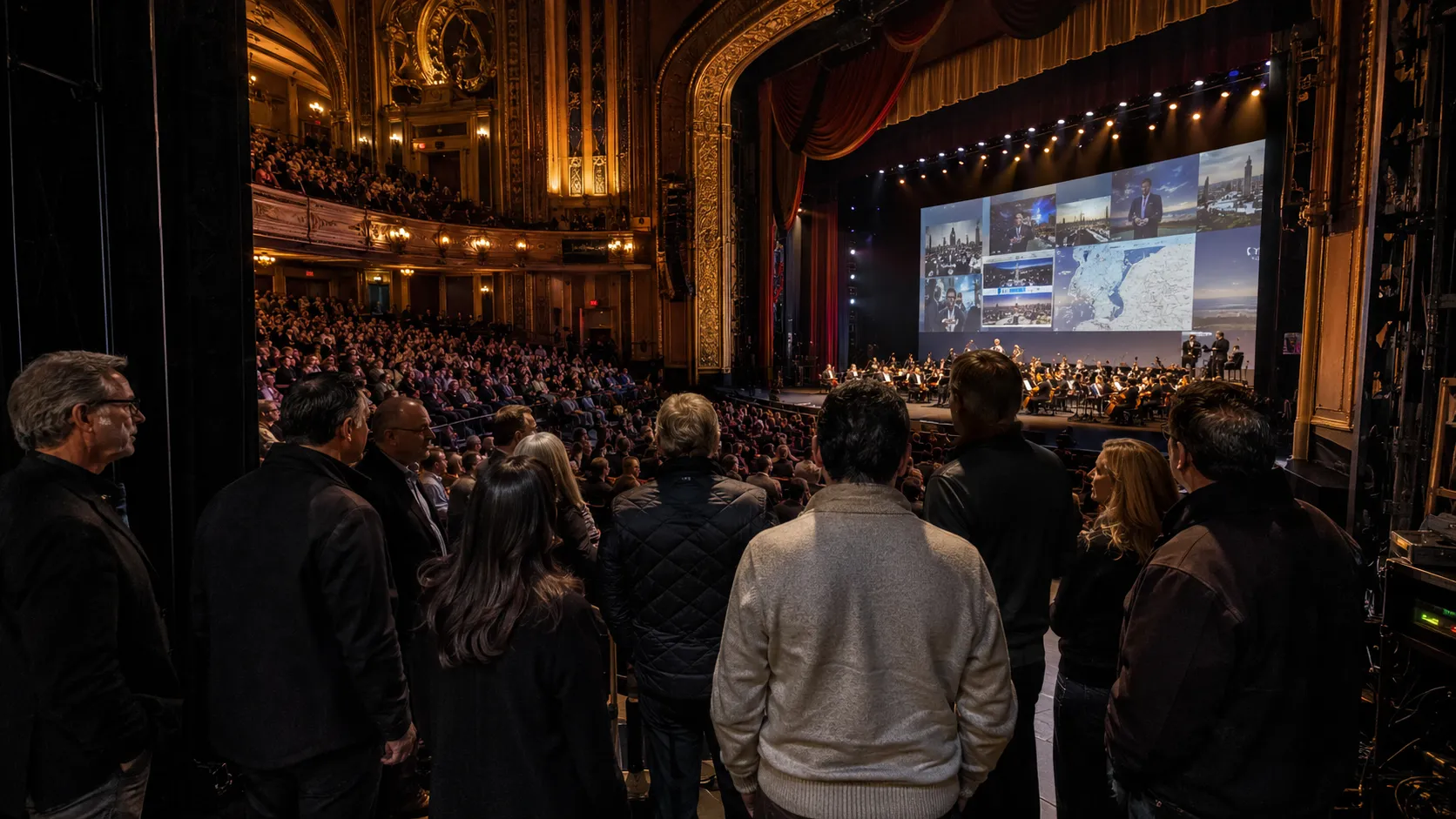
The City Comes Back Online
One by one the city systems return to green and the countdown stops. The incident commander says the line the whole day was built toward: "The city was never the real system being tested." The map redraws itself as the client organization. Transportation becomes handoffs. Power becomes capital and capacity. Water becomes information flow. Emergency services become escalation and decision rights. Neighborhoods become business units, customers, employees. Every hour of the day was a working model of how they actually run.
The Final Decision
Two routes remain. Celebration — a rooftop, a helicopter arrival, a world-class dinner, the film of the day. Or Responsibility — a series of real, prearranged business conversations the organization surfaced in advance: a customer escalation, a stalled decision, a failed handoff, a commitment nobody owns. Choosing Responsibility does not cancel the celebration. It delays it. The message is exact: celebration follows responsibility. It does not replace it.
The Rooftop
The group arrives at an extraordinary final venue. Dinner is exceptional; the room is quiet enough to talk. The behavioral data is not a scorecard — the group examines which decisions created value, which transferred cost, where authority ran ahead of information, whose work stayed invisible. The eleventh chair is still at the table. It stands for the stakeholder who is usually absent when executive decisions are made. Each person answers one question before the day ends: who must be present in our thinking, even when they are not in the room?
“The city was never the real system being tested.”
The map redraws itself as the client organization. Transportation becomes handoffs. Power becomes capital and capacity. Water becomes information flow. Emergency services become escalation and decision rights. Neighborhoods become business units, geographies, customers, employees. The behavioral data from the day is overlaid on real organizational information gathered in advance — and the team sees that every hour was a working model of how they run.
Celebration follows responsibility. It does not replace it.
A rooftop, a helicopter arrival, a world-class dinner, the film of the day, awards. Everything the day has earned — available the moment it is chosen.
Real, prearranged conversations the organization surfaced in advance — a customer escalation, a stalled decision, a failed handoff, a commitment nobody owns. Listen, clarify, commit. Then the celebration follows.
Extreme, without unmanaged risk.
The visible extravagance — the command center, the charters, the production — is not the hard part. The hard part is making a day feel spontaneous while every major variable is controlled. Participants experience genuine uncertainty. The operators never do.
- ✓No rewards for speed, and no unsafe exertion
- ✓No false medical, security, or criminal emergencies
- ✓No uncontrolled contact with vulnerable people
- ✓No deliberate dehydration or unsafe food restriction
- ✓No illegal access and no unscheduled aviation
- ✓No public embarrassment; scoring is never an employment evaluation
- ✓No community partner used merely as an emotional reveal
- ✓Production knows every route, location, and decision branch in advance
An anonymized example of the Executive Immersion format. It describes the experience itself; every engagement is engineered backward from a specific client organization and its real, agreed-upon issues.
We call it Executive Immersion. By sunset, no one who has lived it reaches for that word.
“Man — that was one crazy day.”