Uncertainty, shifting authority, and no complete answer anywhere in the group.
For an established executive team that needs to see how it actually operates when the plan stops working. Below is a real day, start to finish, and the sixteen problems it is built to expose.
One Crazy Day: Expedition · Sedona to the Grand Canyon
At 4:15 in the morning, there is a knock at the door.
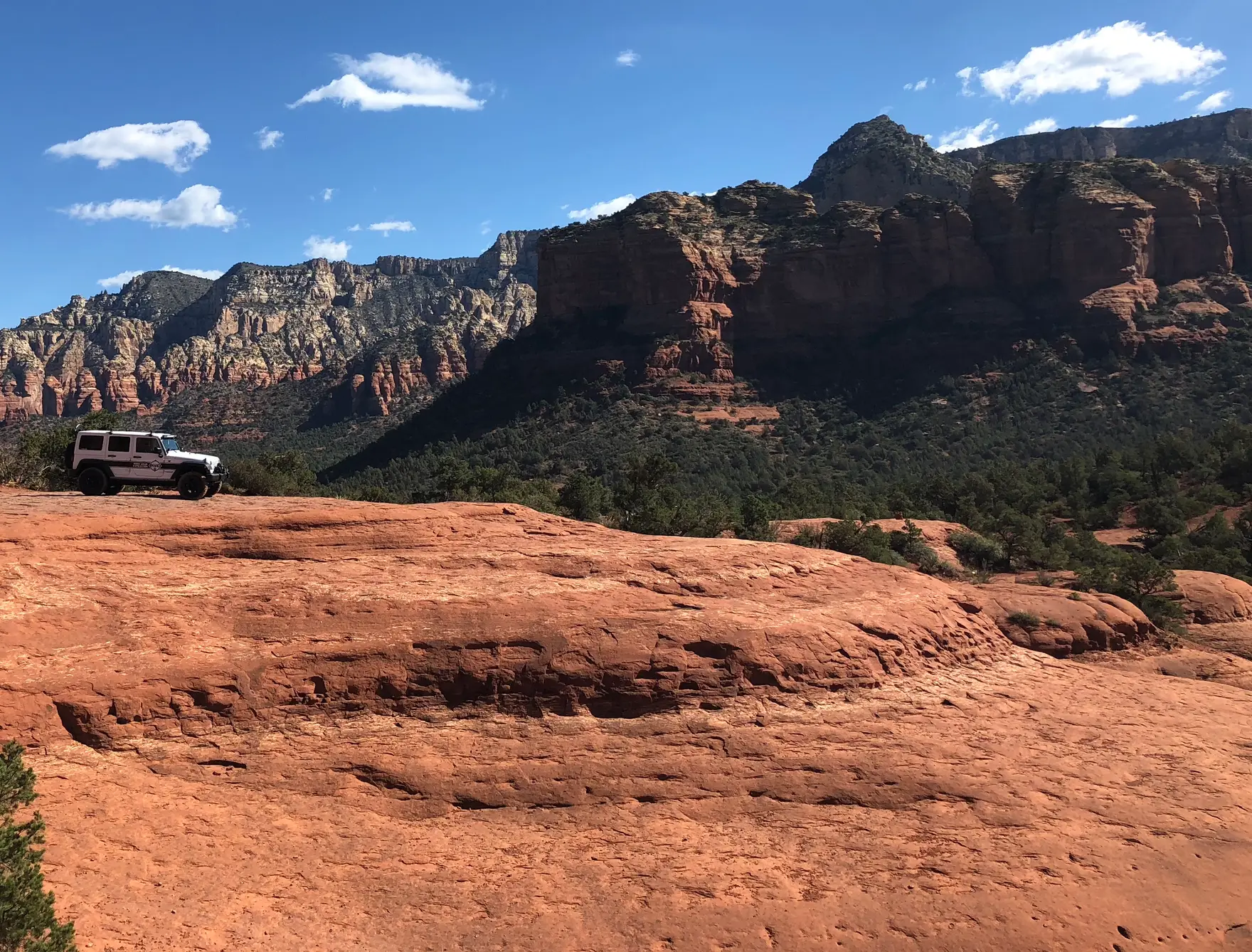
A sealed envelope, a short packing list, and one instruction: be ready in twenty minutes, speak to no one. They leave the resort separately, into the darkness outside Sedona. No Jeeps waiting. No guide explaining the day. No visible route.
Before sunrise
A locked case and no complete picture
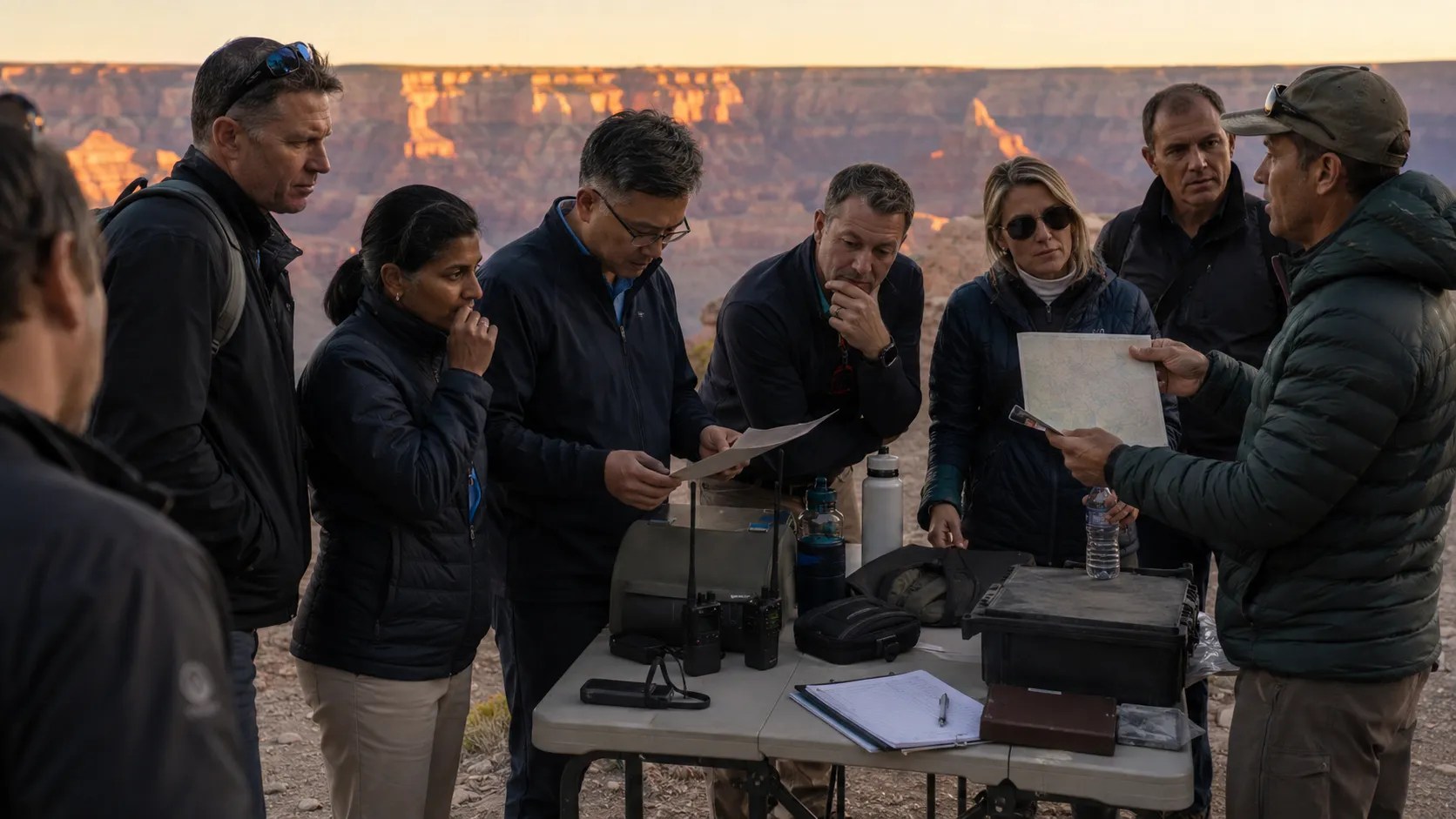
The group finds an expedition case, paper maps, a compass, a radio, a countdown clock and a set of incomplete instructions. Organise yourselves, decide what matters, and move before first light. When the case opens, the keys are inside.
First light
Two per Jeep, and nobody has it all
Executives are paired and released at staggered intervals into the red-rock country. One pair holds the route legend. Another the radio protocol. Another knows where a high-value flag may be. Another has intelligence on a road that looks fast and may cost them everything. Every route choice is a tradeoff: a flag may require a punishing detour, a clue may be useless now and decisive later, and one challenge cannot be solved unless two Jeeps cooperate. Driving faster earns nothing. Safety rules are absolute. The competition is judgement, navigation and communication under incomplete information.
Checkpoint one
The rules change
They arrive believing they understand the game. Then they learn the points were never awarded to the Jeeps. They were awarded to individuals — whoever found the route, recovered the flag, made the call. Whoever ignored a rule lost points. The leaderboard appears. Then the partnerships are broken apart: strong navigators paired with weaker drivers, allies separated, quiet contributors handed decision authority. Everyone who led after stage one must now prove it holds under different conditions with different people.
Stage two
Scarcity, and the need to trade
Each Jeep receives only part of what it needs — maps, recovery gear, route intelligence, water, fuel, comms. The best-equipped vehicle may not have the best route. The team leading on points may need help from the team in last place. Individual incentive starts to pull against the good of the expedition.
Somewhere in the dust
A vehicle goes down
Safe, controlled, solvable — and expensive in time. The affected pair must decide whether to fix it alone, ask for help, or abandon part of their route. The others must decide whether to keep chasing points or stop. Nobody is told which choice will be rewarded.
Near midday
A five-star table in the middle of the desert
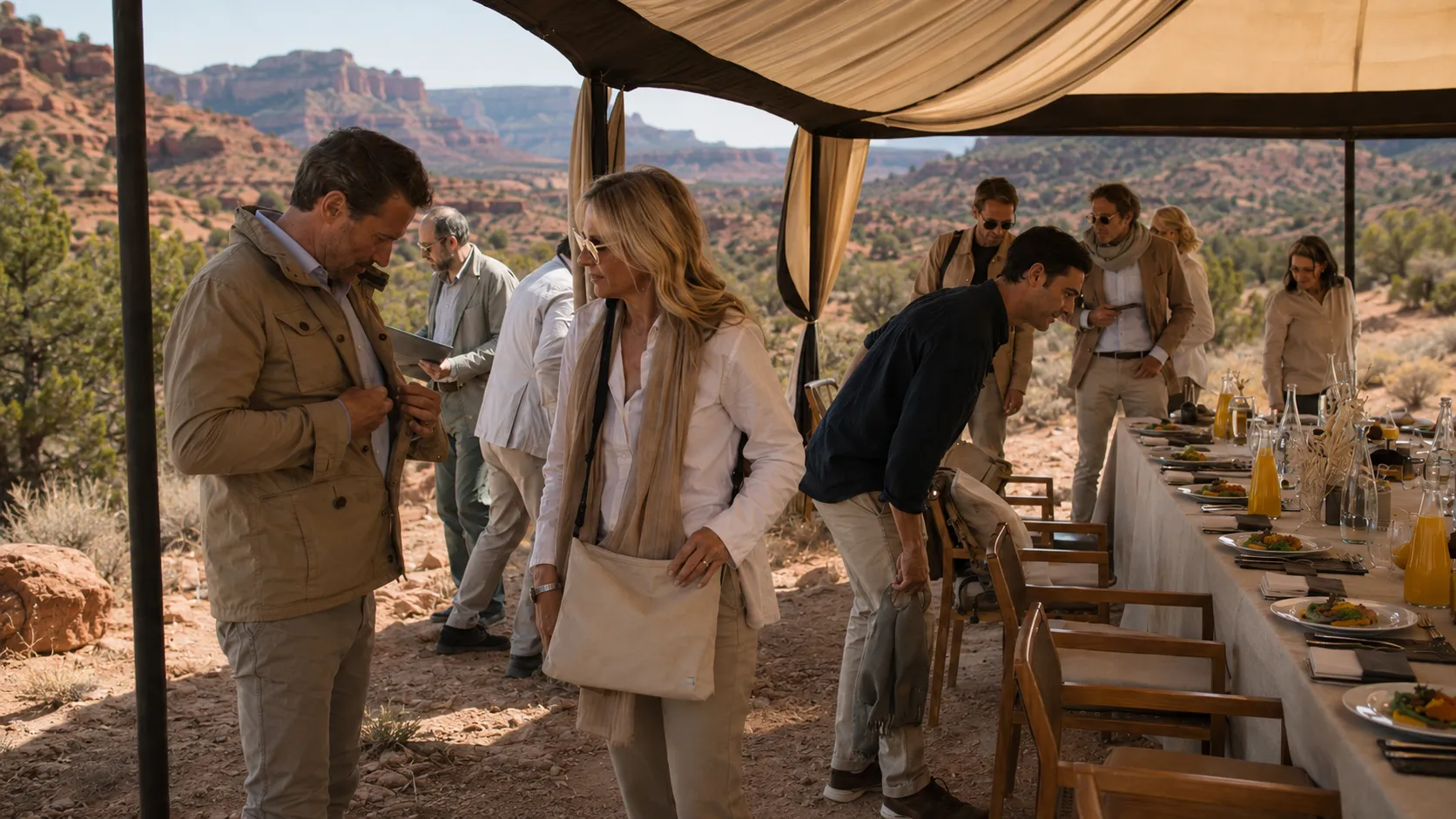
Linen, glassware, a chef, cold towels, a plated meal, and nothing else in sight. For a moment the pressure lifts entirely. Then each person finds a sealed decision card at their place: protect the points you have earned, risk them for a higher-value route, transfer some to another person, or give up personal standing to create an advantage for the group. The choices are private. Only some are revealed.
After lunch
The expedition continues north. Your vehicles do not.
The Jeeps are gone. The group moves by side-by-side, then on foot. Terrain changes, partnerships change again, and authority fragments — one person may not drive, another controls the map but not the radio, another owns safety but not the route.
Mid-afternoon
Two objectives, and not enough people
One offers visible points and a hard recovery challenge. The other requires several people to move ahead, establish comms, secure water and prepare the next checkpoint. One assignment looks impressive. The other protects the expedition. They must choose who goes where, and who gets the best equipment.
Late afternoon
The final drive to the rim
New Jeeps, easier routes, harder decisions. Fatigue has set in and every vehicle is under a constraint — someone cannot drive, someone cannot touch the map, one team has incomplete coordinates, another holds information that is worthless unless shared.
At the canyon
Dinner is in Sedona in 75 minutes
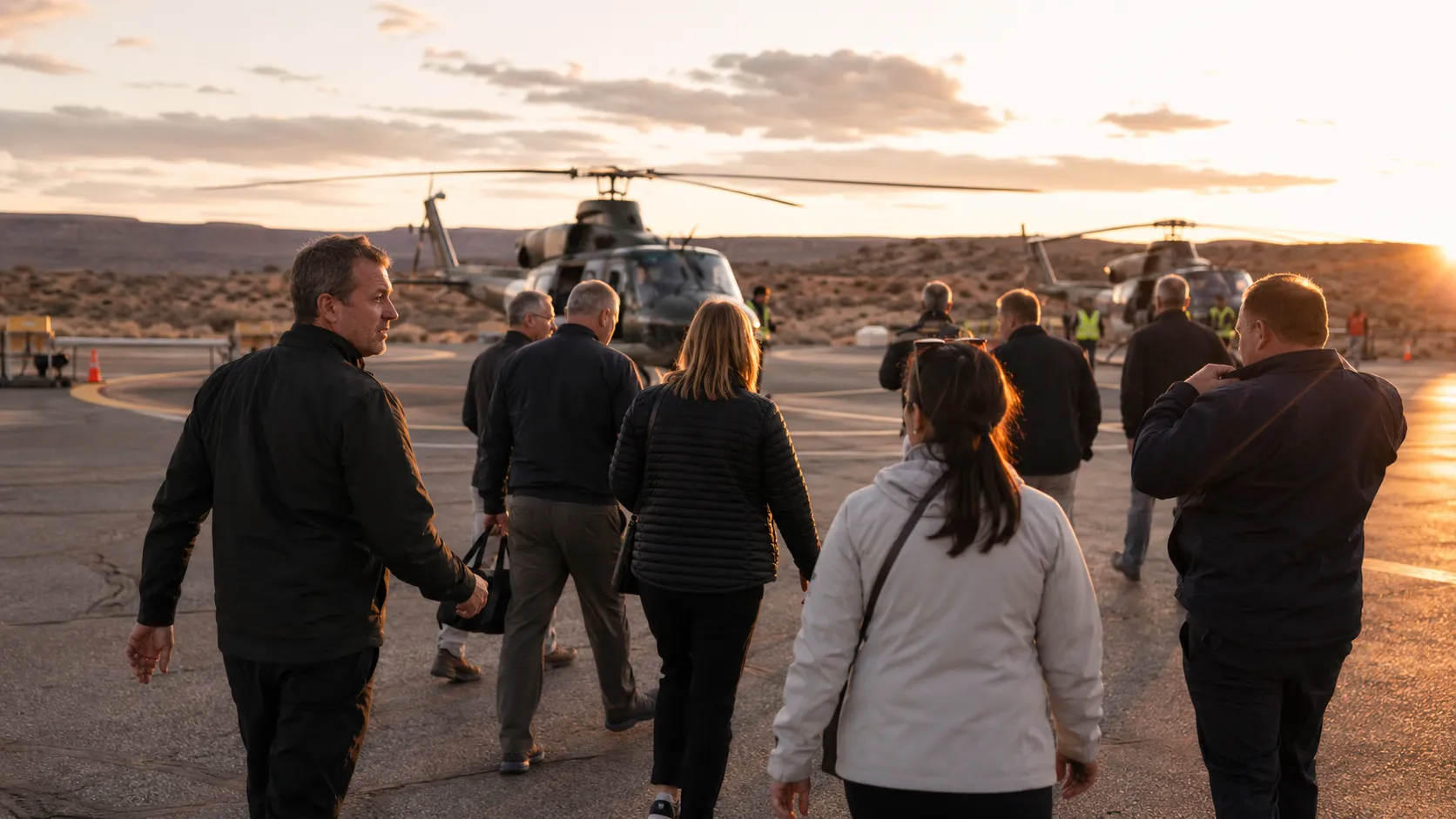
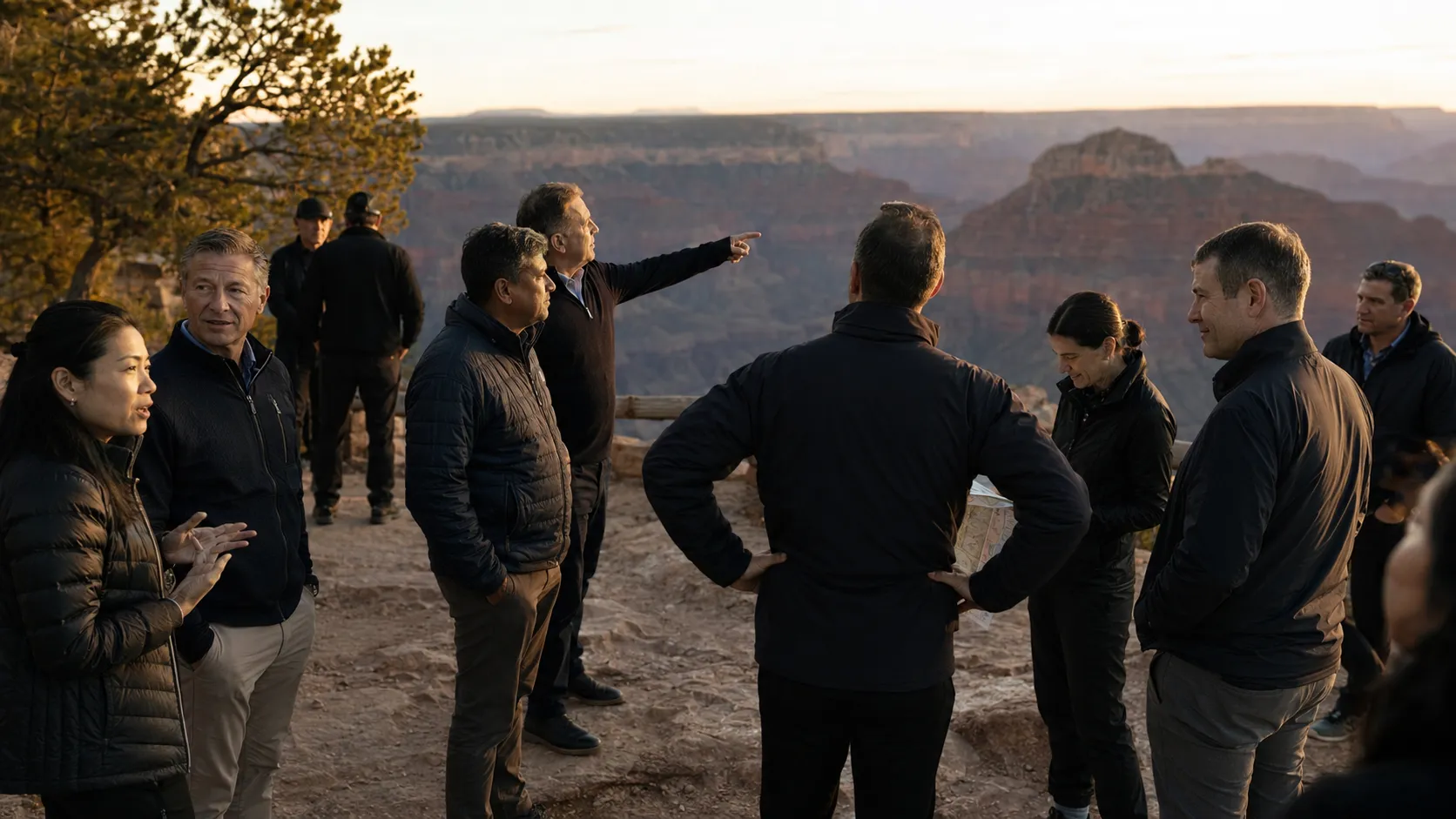
They believe the day is over. There is no possible way to drive back in time. Studying the final clue, they realise the Grand Canyon was never the finish — it was the extraction point. Two helicopters are waiting at the nearby aviation facility. Minutes later they are airborne over northern Arizona, watching an entire day of ground disappear beneath them, and they land near Sedona at golden hour.
At dinner
The scoring, and the last rule
The winner is not necessarily whoever collected the most flags or arrived first. The final score weighs judgement, adaptability, contribution, safety, decision quality, and how much each person strengthened or weakened the whole expedition. Then the group learns the rule that was true all along.
No one can win unless everyone finishes.
It is not an off-road excursion, a scavenger hunt, or a team-building activity dressed up as entertainment. It is a full day built around uncertainty, shifting conditions, competing incentives, individual accountability and interdependence — the pressure to perform when nobody holds the complete answer.
It gives a leadership team one extraordinary day they will talk about for years. More importantly, it makes visible how they actually operate when the plan changes, the information is incomplete, the pressure rises, and success depends on more than individual performance.
The shorthand they take back to the office
“Are we optimising our Jeep, or the expedition?”
“Are we chasing a flag and missing the checkpoint?”
“Who has the part of the map we need?”
“Are we protecting points, or protecting the mission?”
What it makes visible
Sixteen problems the expedition is built to expose.
Name the one that is actually costing you money and the day gets designed backwards from it. Each of these has a mechanism inside the day — a moment engineered to make the behaviour happen where everyone can see it.
Whether they run the company or run their function.
Problem 01
Functional silos
No Jeep holds all the information and no individual can optimise the route alone. They must decide continuously what to share and what to protect.
Where the business is losing speed because information, resources or trust stay trapped inside a function.
Problem 02
Weak cross-functional trust
Partners are reassigned repeatedly, breaking established alliances and forcing dependence on people they would not naturally choose.
Trust built on observed behaviour rather than a discussion about trust — the group now has evidence.
Problem 07
Individual wins that cost the enterprise
Situations are engineered where a person can improve their own standing while raising risk for everyone. Then: no one can win unless everyone finishes.
Whether your incentives quietly reward functional performance that damages the whole system.
Problem 16
Weak shared identity
A hard day produces a common story — the broken vehicle, the impossible deadline, the desert table, the extraction.
Shared language for the enterprise-versus-function tradeoff, earned rather than taught.
Tell us where they'll be. We'll tell you what's possible there.
Thirty minutes with James. Bring the location and the problem — you'll leave the call knowing whether there's a legendary day in it, and roughly what it costs.
Book a 30-minute design callExecutive Immersion days start at $35,000. See how it fits with the other ways we work →
No pitch deck. No proposal until you've asked for one.